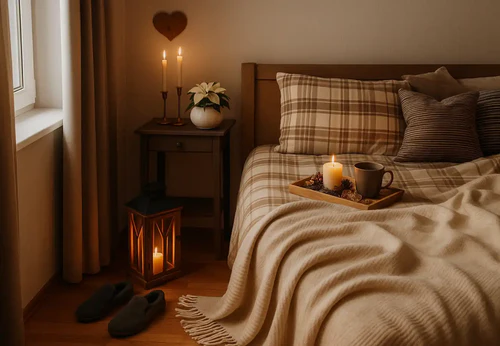
Light
How brightness shifts across the evening. We explore the timing of main overhead lights versus softer, warmer lamps, and how the absence of harsh blue light can change the feeling of a room before rest.
When we say sleep-friendly, we mean the conditions around your evening — the light, the noise, the pace, the small choices. We write about those conditions in plain language so you can shape them yourself.
A sleep-friendly evening is simply one that does not work against rest. It is less about strict rules and more about removing the obvious friction: a room that stays bright until the last minute, a schedule with no soft edges, a final hour packed with stimulation.
We help you notice that friction and rearrange it. Nothing here is a fixed rule. You stay in charge of what fits your home, your work, and the people you share your space with.
We describe environments to consider, then leave the decisions to you.
Real weeks are uneven. Our framing expects that and works around it.
Across our programs, the same four conditions come up again and again. We unpack each one as general, observable lifestyle factors — never as health outcomes.
How brightness shifts across the evening. We explore the timing of main overhead lights versus softer, warmer lamps, and how the absence of harsh blue light can change the feeling of a room before rest.
The background noise of a household and the quiet pockets you can protect within it. Sometimes it's about adding a consistent, gentle sound; other times it's about finding a moment of absolute quiet.
Room temperature, bedding, and the simple tactile cues that make a space feel restful. Cool air and warm blankets form a classic combination.
Where devices sit in your last hour, and how you might give them a clearer boundary. We do not demand a digital detox, but we provide frameworks for creating intentional "parking spots" for phones and laptops well before you turn in.
When the broad shape of an evening is decided in advance, you spend less energy deciding what to do moment to moment. That predictability is the quiet benefit most readers tell us they notice first.
Being clear about what we do not cover is part of being a trustworthy studio.
We do not discuss conditions, symptoms, or treatments. If something concerns you, a qualified professional is the right starting point.
Lifestyle change is gradual and personal. We share frameworks, not shortcuts, and we avoid promising any particular result.
Everything is optional and self-directed. You decide what to try, what to keep, and what to set aside.
Our habit frameworks turn these conditions into small, repeatable steps you can actually keep.